










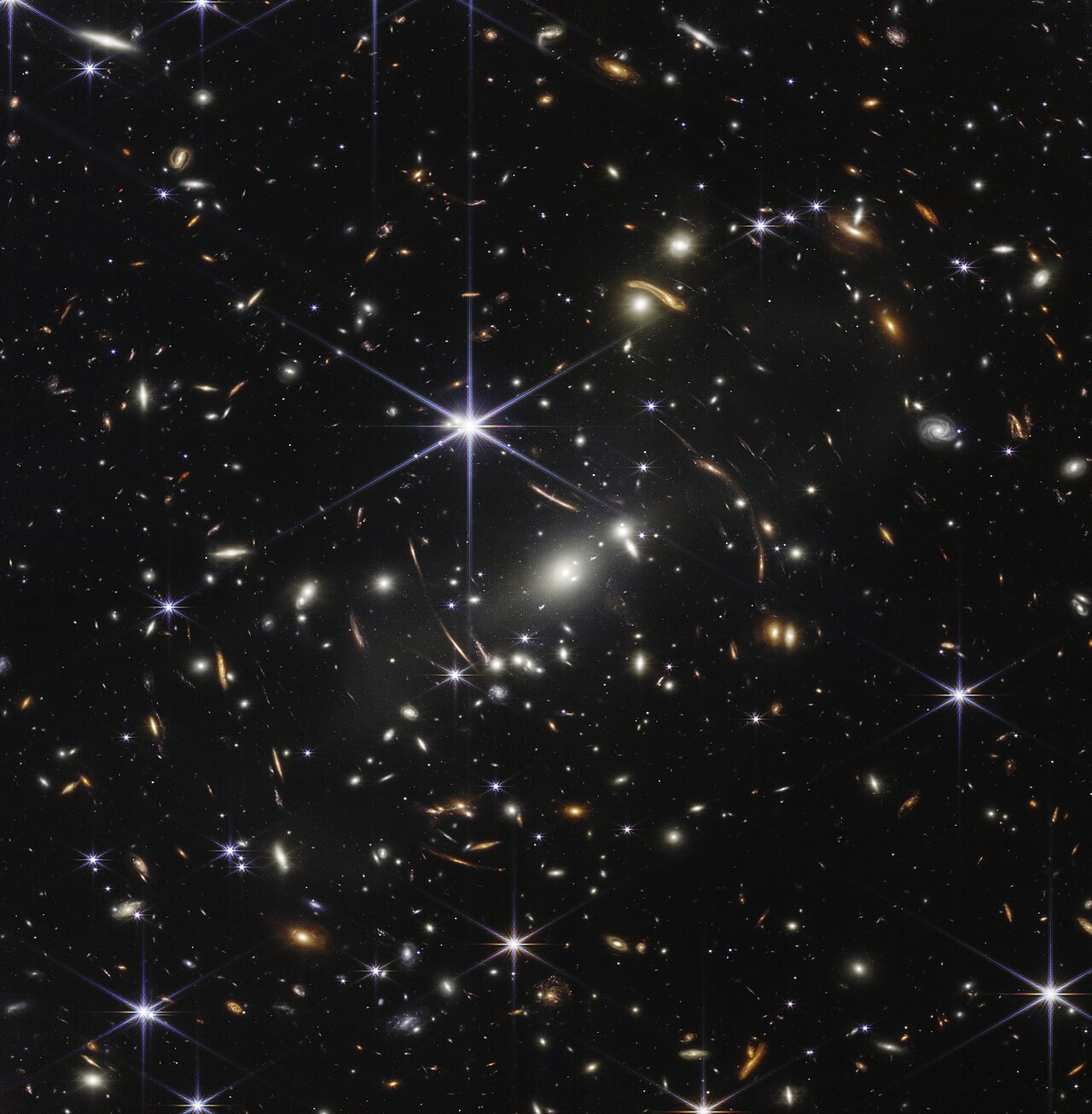
The James Webb Space Telescope (JWST), often called the “successor” to Hubble, is currently operating at its peak in early 2026. While Hubble changed how we saw the universe, Webb is changing how we understand its origins.
1. Seeing the “Invisible” (Infrared Vision)
The universe is expanding, which causes light from the most distant, ancient stars to stretch out. By the time this light reaches us, it has shifted from visible light into infrared.
-
Dust Piercing: Unlike visible light, which gets blocked by cosmic dust, infrared light can pass right through it. This allows Webb to look into “stellar nurseries”—thick clouds where stars are currently being born.
-
The Gold Mirror: Webb’s primary mirror is coated in a thin layer of real gold (about the mass of a golf ball) because gold is an incredible reflector of infrared light.
2. Recent 2026 Discoveries
As of March 2026, Webb has made several groundbreaking observations:
-
The Oldest Comet: Just days ago (March 13, 2026), data confirmed that an interstellar comet named 3I/ATLAS is likely 12 billion years old—more than double the age of our solar system.
-
Building Blocks of Life: In February 2026, Webb detected complex organic molecules like benzene and methane in a nearby galaxy, suggesting that the ingredients for life are much more common in the universe than we thought.
-
Planetary Defense: In early March 2026, Webb’s precision helped NASA rule out a 2032 lunar impact risk for asteroid 2024 YR4.
3. Webb vs. Hubble: The Power Difference
| Feature | Hubble Space Telescope | James Webb (JWST) |
| Mirror Size | 2.4 meters (single piece) | 6.5 meters (18 gold segments) |
| Light Type | Visible & Ultraviolet | Infrared (Heat-seeking) |
| Location | Orbiting Earth (570 km) | L2 Point (1.5 million km away) |
| Look-Back Time | ~12.5 Billion Years | ~13.5 Billion Years |
[Image comparing the mirror sizes of the Hubble and James Webb Space Telescopes]
4. Why 1.5 Million Kilometers Away?
Webb is located at the Second Lagrange Point (L2). This specific spot in space allows the telescope to keep the Earth, Moon, and Sun all on one side. This is crucial because Webb must stay incredibly cold (below -233°C) to detect the faint heat of distant stars. Its tennis-court-sized sunshield provides an “SPF of 1 million” to protect its sensitive instruments.


